
Fancams; the bread and butter of K-Poppies
Did I say bread and butter? I meant lust and lustter

Guest Writer: Amal Shiyas
Little gets me as giddy during a K-Pop comeback—slang for a new promotion cycle following the release of an album, EP, or even a single—like the fancams. On my feeds, these videos with dates in the format YYMMDD and a member’s name on the title bring out premium horny clownery in fellow K-Poppies. See, a fancam is a focussed recording of a single member within a group captured in its live glory (clear pore, dripping sweat and all). Since a comeback usually guarantees a fresh supply of live performances on South Korea’s daily music shows and subsequent concerts, the fancam is the closest a fan gets to their favourite.
I love it here. Because the purpose of a fancam is to pay attention. Sometimes that means being feral about platinum and pink and purple hairs or the strategic peek of abs. Those are fine reasons, let me say. But it remains underappreciated how K-Poppies also hold performance to high, if not exacting, standards. There are few avenues in mainstream entertainment where choreography in particular has amassed as much regard. Fewer still offer training and career promises like the idol pipeline. To that end, fancams remain top in a short list of fandom affairs that are interested in a performer’s artistry. You are always going to find fanwars about who’s definitely not lip-syncing, who’s got the most immaculate synchronisation, the most miraculous body lines. It’s funny but it’s also dead serious.
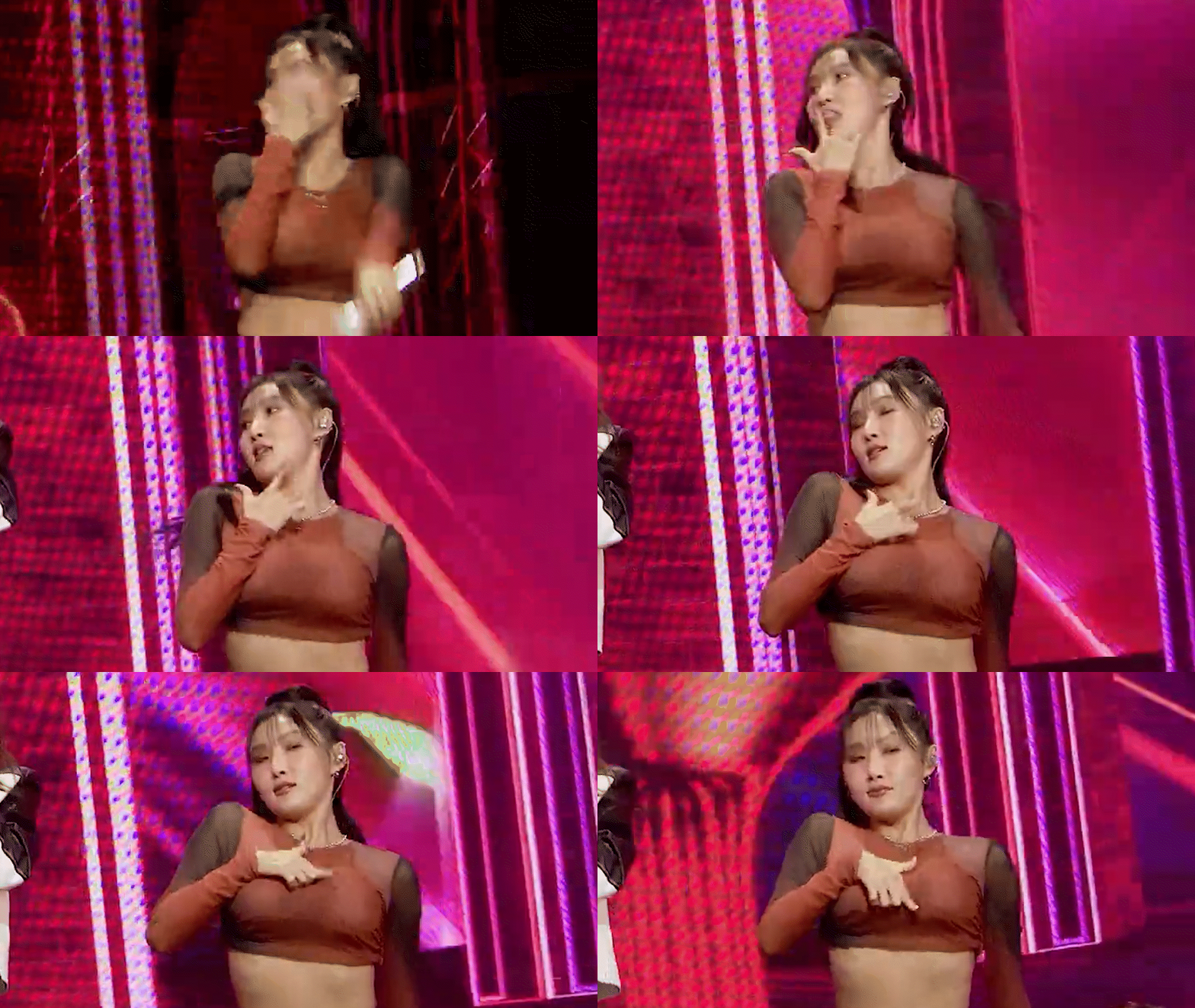
The first viral fancam of EXID member Hani revived a group at the brink of disbandment in 2014. Fans have since been using fancams to override ascribed positions in a group (vocalist, rapper, dancer, visual/centre). In official broadcasts, these positions determine who sings what line and who is captured when. There is no guarantee of fair shares of screentime. A fancam then is a democratising endeavour, a non-trivial victory against the norms that dictate popularity. Music shows and labels have adapted, with official channels now releasing fancams on YouTube immediately after airing/release. (We get facecams as well for certain groups—to my utter delight). In essence, fancams are not always ‘fan’made but they respect the gaze of an ardent enjoyer.
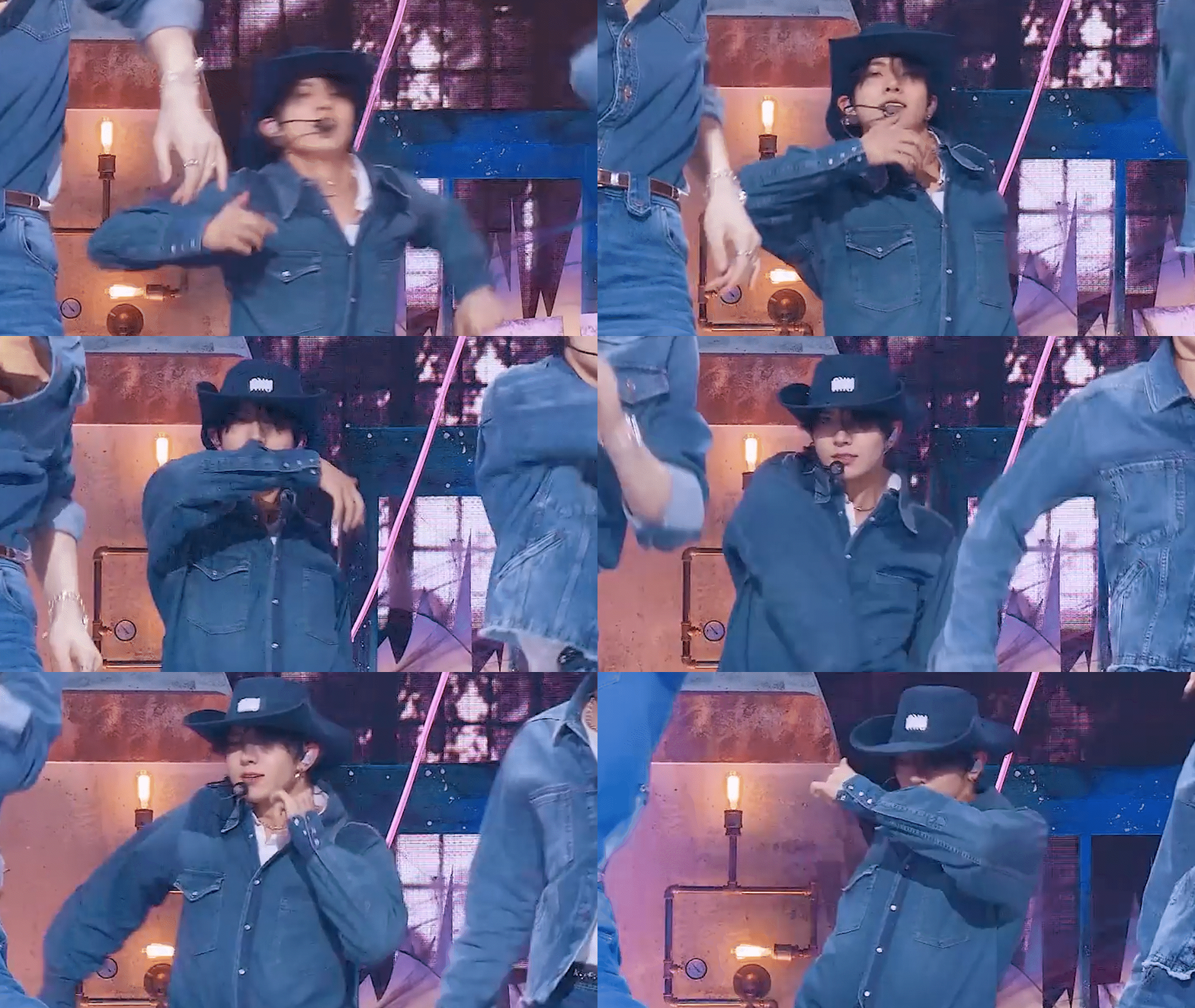
Fancams are the staple in my own K-Pop diet because they tell me the individuality of a performer; I seek them to indulge in what I love about dance even when I am not a fan of the music. I love watching SHINee’s Taemin for the effortlessness of his technical execution; MAMAMOO’s Hwasa for the stage presence of a priestess who stops time and her outrageous core strength; BTS’ J-Hope for working a handheld mic into choreography with peerless style while also being mesmerisingly possessed when he performs songs without choreo. My current personal joy and favourite ENHYPEN’s Hee-seung experiments with interpretations according to his fit (cowboy Hee, jock Hee, prince Hee), sustains a mood with minor but precise pepperings of his own, and has mastered the game of eye contact with a camera.
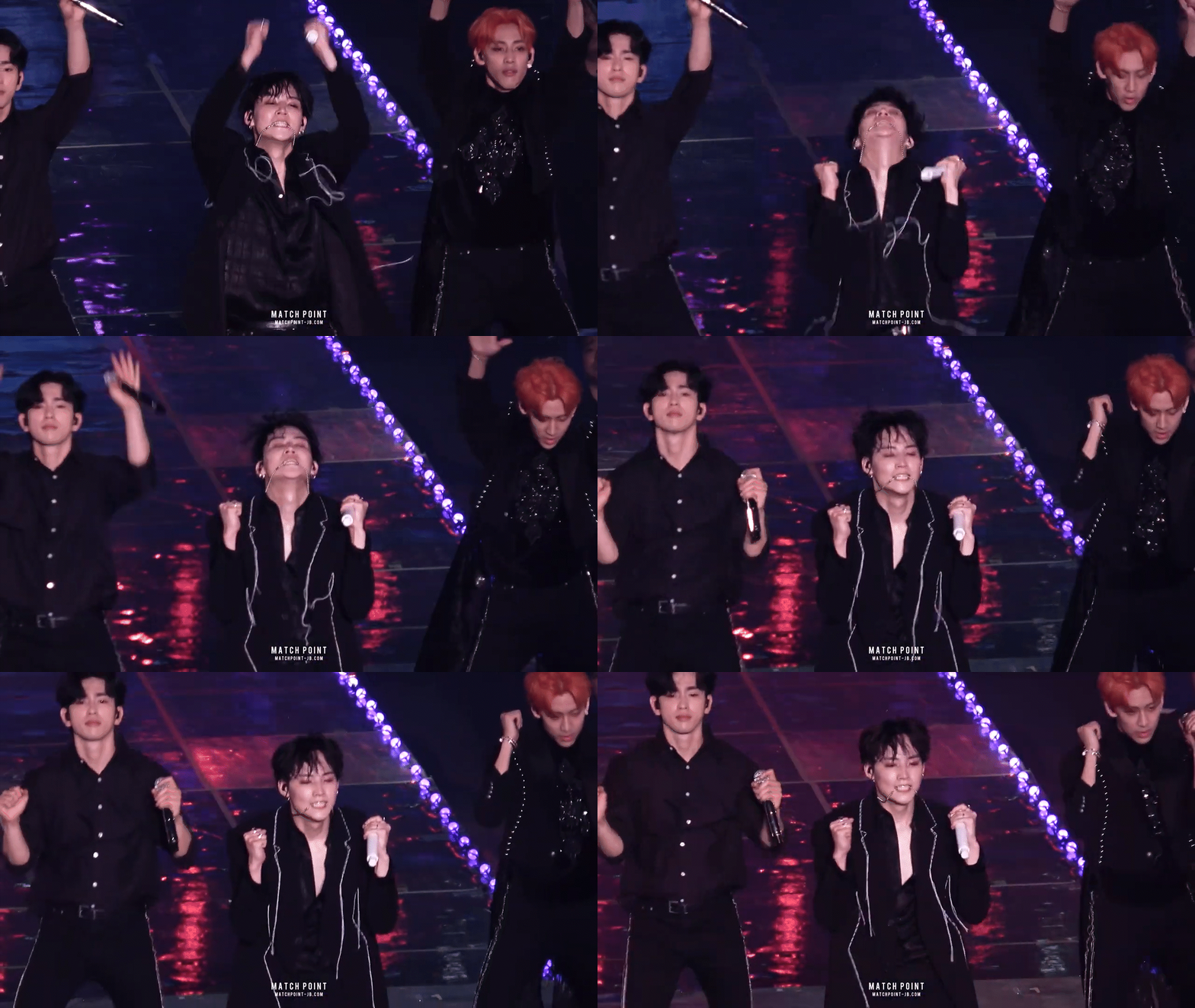
For a performer who sings live, committing the intricacies of choreography to muscle memory is about conserving energy and breath control. It isn’t always obvious in a recording of a group performance, given how wonderfully synced they can be, but a fancam captures exactly when someone takes a beat, what moves they choose to execute in full might, and which ones they shuffle to make do. I love a performer who wastes no second they have before the main camera and I also love a performer who knows how to use the time away from it wisely. I love the ones who play with the audience, like TWICE’s Jihyo whose charm knocks the air out of my lungs. I love watching elite performers respond to unpredictable situations at concerts—I am thinking of GOT7’s Jaebeom biting into his flying neck chain for absolutely no reason—and wardrobe malfunctions. Fancams feed a fundamental instinct I have when I watch someone inventing a moment and I want to send the timestamp to my friend: did you see what they did there?
I love, most of all, that there is no such thing as a perfect fancam. It’s what makes watching fancams an honourable act of loving an artist. Fans spend time with fancams, ruminating on hard work and practice and talent in a way that moves me. Precision matters, and so does growth. Fandom babies make earnest efforts to binge performances in chronological order from a group’s debut days, embracing fancams as an archive. They aren’t daunted by the repetitiveness of viewing the same song at multiple stages and very often, are willing to engage with fancams of every member. In doing so, they invoke the language of improvement rather than perfection. I enjoy this parasocial courting, for myself and for others. That fans take their popular entertainment with an emotional fidelity to craft can be a beautiful thing.
In the idol ecosystem, K-Pop artists are, for a good part of their working life, positioned as the product, dwarfing the music they put out. They are groomed to be stars, influencers, entertainers. It is known to them, as to us, that their performance era will likely be far shorter than the rest of their lives. Yet, so many of them spend their youth training to be one with the stage. They deserve their fancams. And fandom does too. The well-documented sours of K-Pop fandom need no repeating: the meaningless metrics, the rabid toxicity, and the capitalistic wasteland are irrefutable legacies. In all this, the most delightful fancams are artefacts, souvenirs, organically built and lovingly perfected, shared by micro fandoms within fandoms, in service of performance.
*
Amal is an editor, currently steering the editorial output of Alserkal Initiatives, an arts & culture enterprise in Dubai. Previously, she was part of the FiftyTwo.in team. She is also one of my closest friends.
 | A guest post by
|