
Rani Mukerji's forgotten legacy
and the fantasies of Indian women

At 5 feet 3 inches, Rani Mukerji is the personification of chhota packet, bada dhamaka or the English phrase “though she be small, she is fierce.” Her 29 year long run at the movies got its recognition this week as she was awarded with the National Award for her work in Mrs. Chatterjee vs Norway. But as expected, we are not here to talk about her acting prowess but instead gush about her dance moves. It was a single Instagram reel, as is the norm nowadays, that sent me down a rabbit hole of Rani Mukerji dance songs. I was suddenly reminded of the feeling I got when I first watched her in Dhadak Dhadak from Bunty Aur Babli (2005) and I knew I just had to talk about it.
I’m sure you have all lit a butterfly firecracker? Those colourful little zippy things that flutter around the street and dazzle your senses. That is Rani Mukerji dancing on screen. She simply bursts with energy as soon as she begins moving. The reel I had seen compared her to Shahid Kapoor in the song Hadippa. The reel claimed that she was even better than Kapoor in the song. The maker was not wrong. Through sheer power Rani blindsides her co-dancers. She shines on screen.
Dhadak Dhadak is the most Bollywood-ised character establishment ever. The song opens with Abhishek Bachchan walking through the colourful and chaotic streets of Banaras. Udit Narayan sings “Chhote chhote sheheron se, Khaali bore dopeheron se, Hum toh jhola uthake chale..” As the lyrics by Gulzar suggest, this is the story of people from small towns with big dreams. Such is the story of Bachchan’s character, Bunty, who travels by foot, by train and by motorcycle to reach his destination: the big city. Halfway through the song, we are introduced to our second protagonist, Rani Mukerji. A Punjabi girl, from a small town, who lives in a huge haveli or palatial mansion. A girl who is fun-loving, energetic and bubbly (as her name Babli suggests). How do we know any of this? Well, it’s in the dancing.
We first meet Babli when she is surrounded by semi-naked, muscular, oiled men at an akhara or a traditional gym. She is dressed in bright pink, whipping her hair back and forth in slow motion as the men around her flex, exercise and do it all in little to no clothing. From her dancing we think: this is a girl who is free spirited and unique—she has to be if she’s dancing among oiled up men with no concern for them. Her slightly sanki or crazy nature is established time and again through the set ups she dances in. She rides a moped in one scene, she dances with older aunties in another scene and she struts her stuff in the streets in a third.
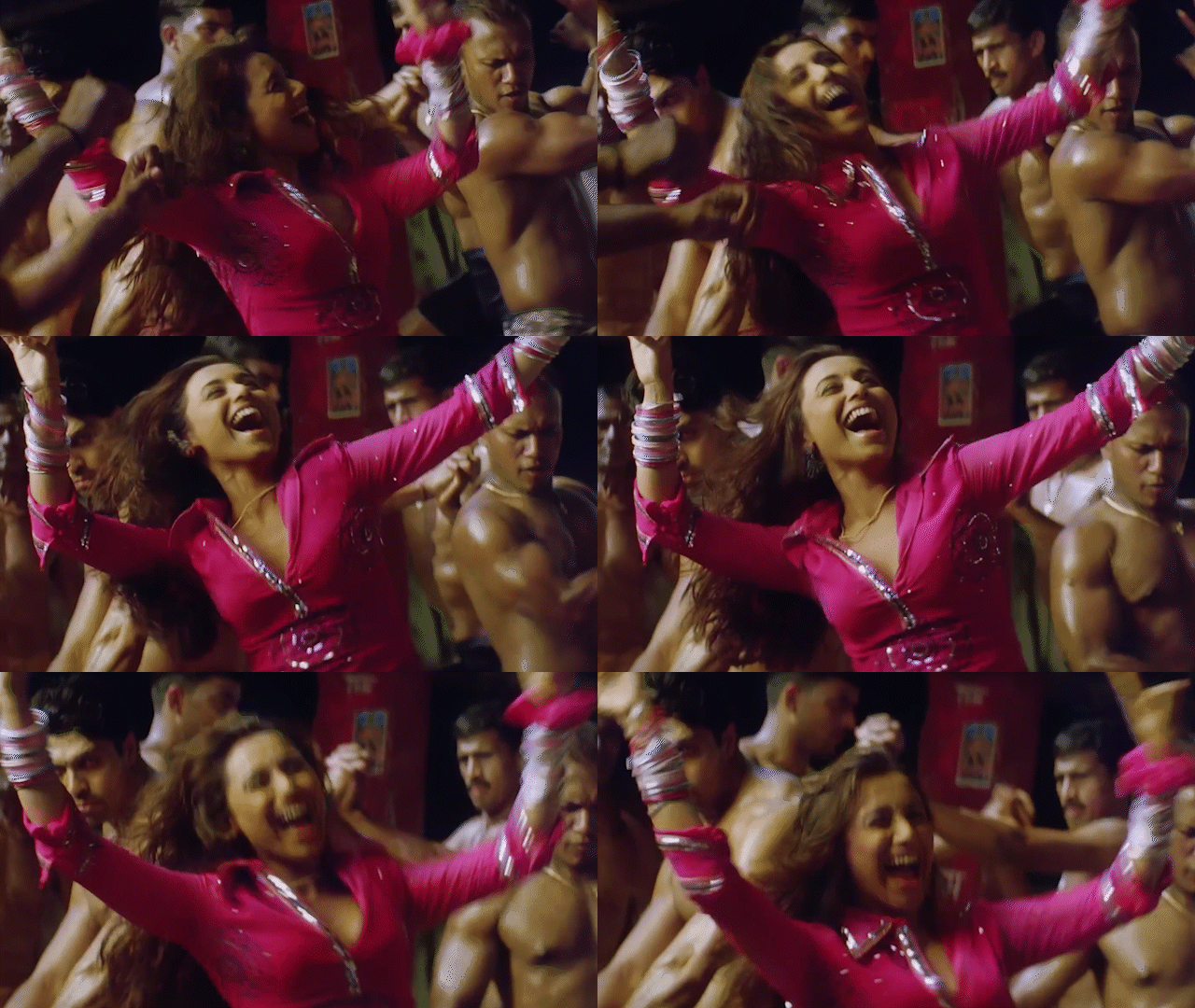
Her clothes drive the point home: bright, colourful, sequined and loud. This is a girl who is not afraid of being who she is. She takes up space, she asserts her personality.
But it is the dance moves by Vaibhavi Merchant that makes Babli’s vibrant character really reach us. The moves are not difficult, which is an even harder job I think. They are accessible but they give the dancer the potential to project their energy, an opportunity Rani does not shy away from. A particular scene stands out—she is one among several ladies dressed in yellow and red, dancing in the picturesque green farmland of Punjab as a train passes by. This is the chorus: dhadak dhadak, dhadak dhadak, dhooan udaye re, dhadak dhadak, dhadak dhadak, seeti bajaye re. The chorus is onomatopoeia for both the sound that a train makes on the rails and the sound of a heart beat—Gulzar’s genius writing. The chorus describes the sounds and the sights of the train including the smoke coming up from it and the whistle of it whooshing by. Merchant gives Mukerji a bouncy, folk step where her hands cross her chest to depict the dhadak or the heartbeat. In the repetition of the line, Merchant chooses a step where Mukerji goes back and forth mimicking the way the wheels of the train move. And so the words dhadak dhadak showcase both the beating of the heart and the sound of the train which passes by in the background gloriously in time with Mukerji and the dancers.
Mukerji throws her energy at the screen, flashing her charming smile. It is this smile that makes her dancing so damn addictive. The rest of the song showcases her ability to shapeshift. So far we have seen her as the bright and vibrant small town girl with endless energy. She feels like someone we would want to be friends with. The song switches gears, as does her outfit, when she dances in the haveli. She dons a blue ghaghra or skirt and spins glamorously through this palatial mansion. Here, her vibe is different. She is the star, the enchantress, the queen of glamour. Her smile dims down and we focus on her sharp jawline, her deep eyes and her alluring gaze.
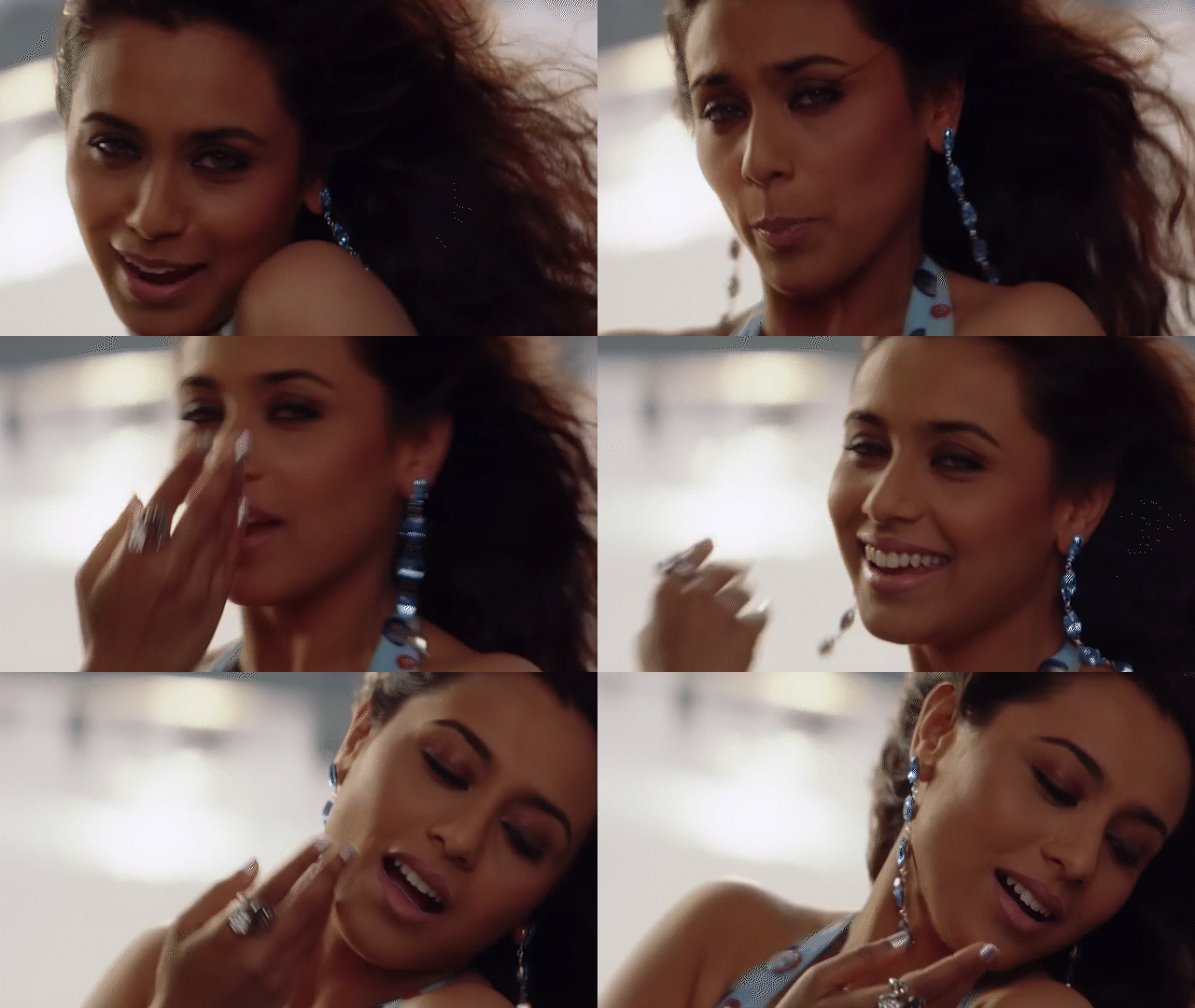
This one scene made me, as a child, want to be Rani Mukerji. Her beauty, her presence on screen, her style, was what I wanted to have growing up. It is in these moments of inspiration that cinema magic can really be measured. It is this that Bollywood is so brilliant in conjuring—an image of aspiration. Rani Mukerji in many ways represents the average Indian woman’s ultimate fantasy. She was never known for having a size zero figure. On screen, she never portrayed a sort of unachievable aura. She instead showcased to the world what Indian beauty had the potential to do. The kind of attractiveness that came with a wheatish complexion, big eyes lined with kajal, love handles, wavy hair and the ability to command every room one thumkas in.
A note from the author: Hello, and welcome back to the Deep Cut. This welcome is as much for you as it is for me. I have been away for far longer than I have wanted. Why? Well, Substack notes has the answer and so will my personal newsletter Mahila Profound. Is this note just a piece of self promotion? Yes, and no. Thank you for staying patient. Thank you for still following. I hope to fangirl here more often now. I hope you will continue to join me for the journey. See you at the movies!
Ah! This was so lovely to read! Dhadak dhadak has got to be one of my favourite film songs. Just everything about it — but especially the lyrics and how it finds the pulse of the India at the time it was made in — just ooooof! My favourite line from the song is "o ho zara, rasta to do, thodasa baadal chakhna hain"
And of course, the spunky, winsome smile that Rani dons for most of the film :)
Thank you for this gorgeous piece and for refreshing my memories of this film, really enjoyed reading it :)
Really enjoyed this profile Eshna!